Guest Post by Ineke De Brouwer
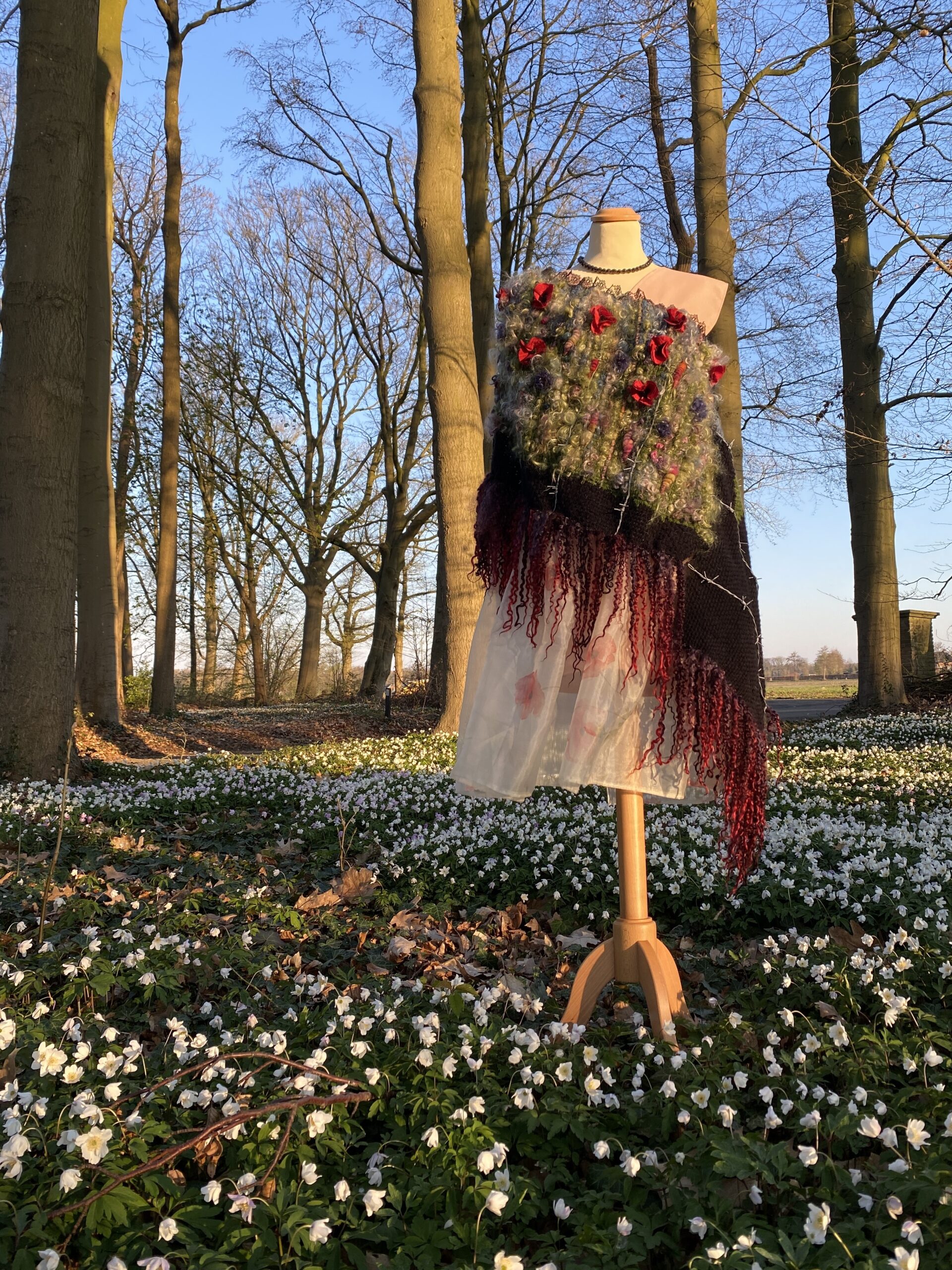
This blog post is a follow-up to the article about the shawl Libertas, which I designed for an exhibition commemorating eighty years of liberation in my hometown. At Suzy’s request, I’m sharing a bit more about the making of the piece.
For those who haven’t read the original article:
Libertas is the eighteenth piece in my Dynamic Weaving series. It was created for a special exhibition in Brummen, my hometown in the Netherlands, in response to an open call to reflect on 80 years of freedom. My projects usually include an artwork, a short video, and an article with background information and photos. But since this shawl was exhibited without any explanatory text, I needed strong, recognisable symbols to tell the story visually.
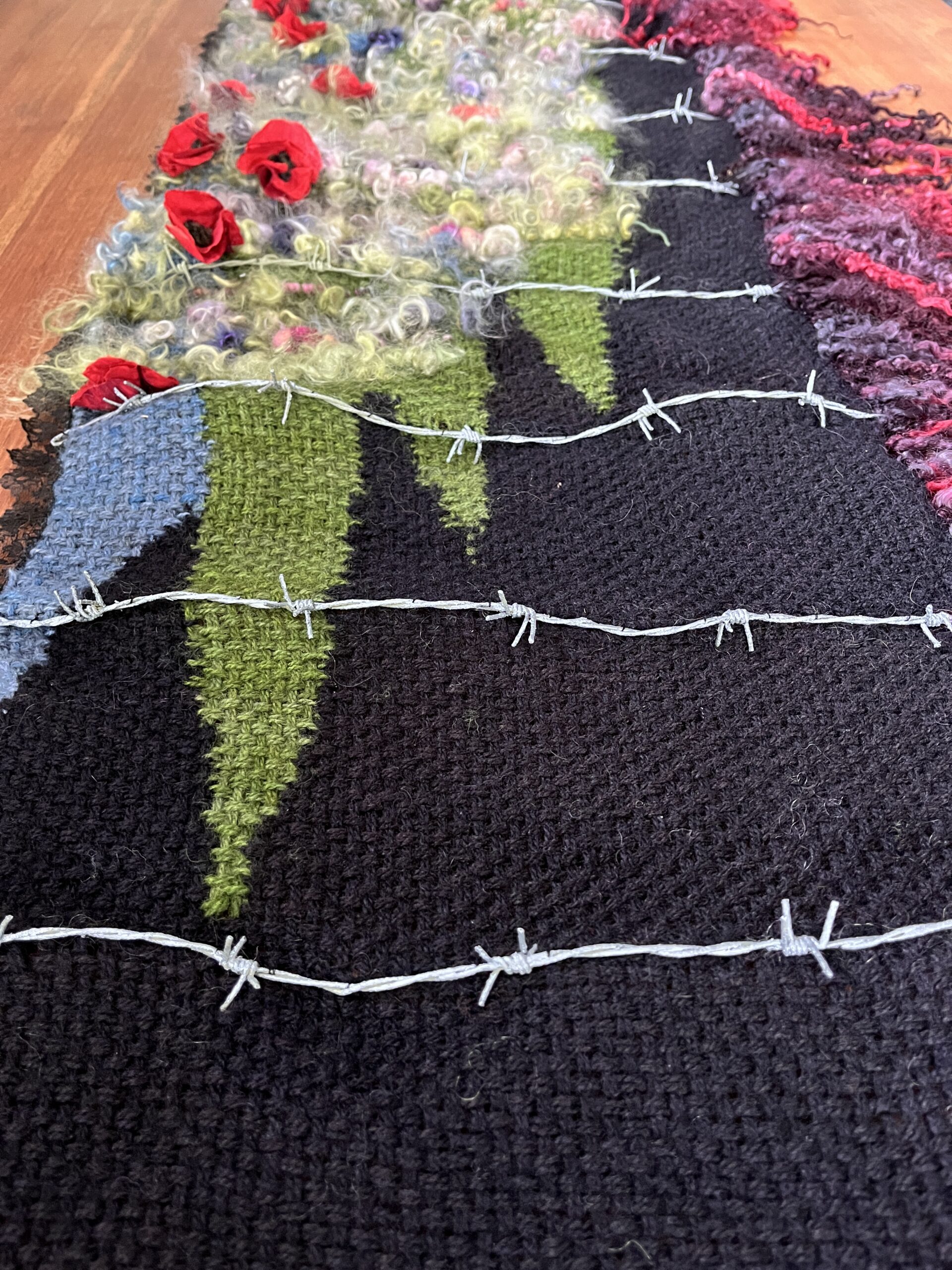
I chose to make use of barbed wire to symbolise war, oppression, and imprisonment, and poppies to represent liberation and peace.
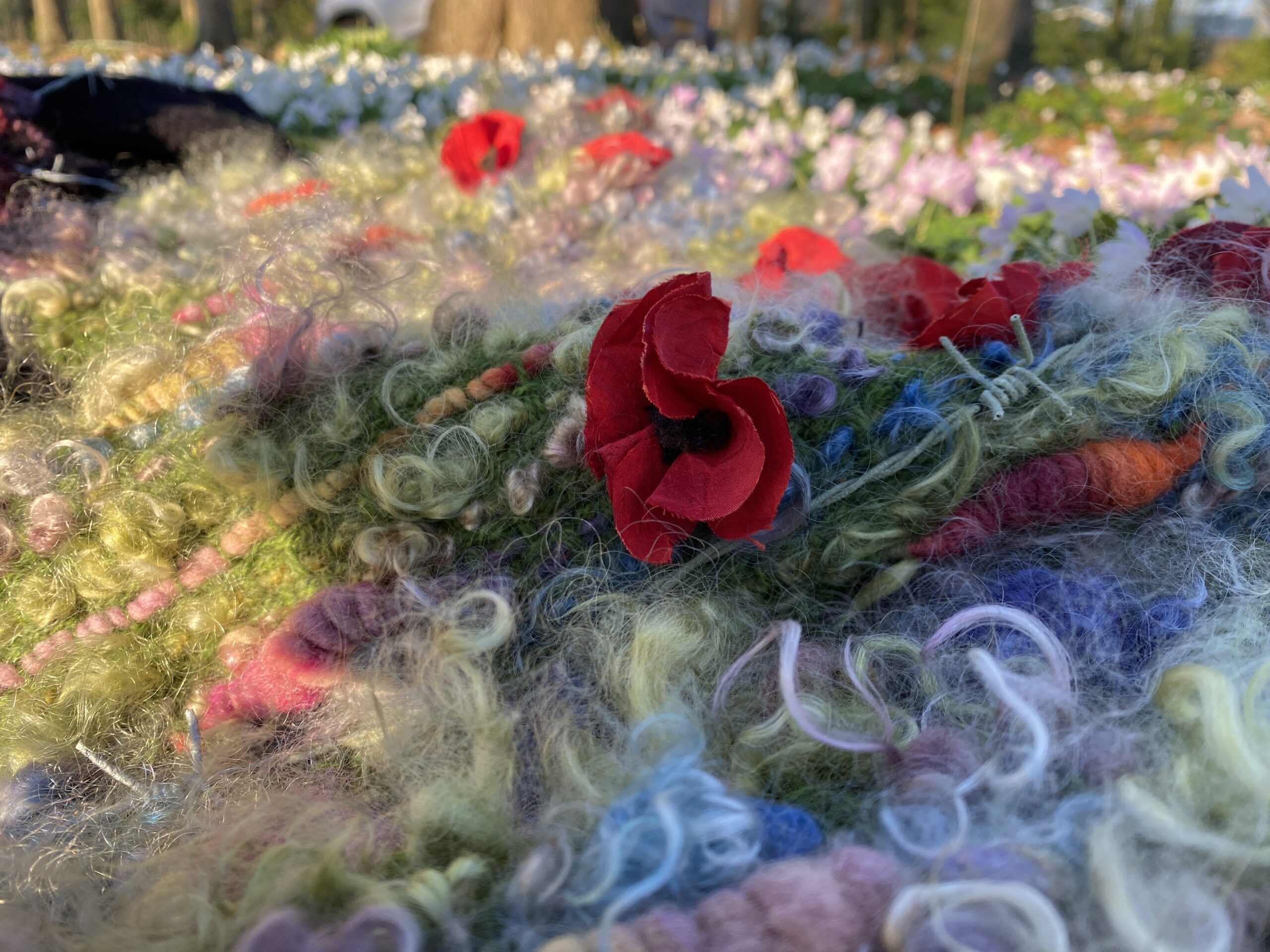
I understand you might be wondering how barbed wire could possibly be used in a shawl and still keep it wearable. I’ll cover that later in this blogpost. .
Since Suzy specifically asked me to tell you more, regarding the techniques I used, I’ll start by sharing a challenge I had to solve.
Because the composition shifts from the oppressive blackness of war—barbed wire and harsh lines—towards the uplifting spirit of freedom, spring, and softness, I needed a technique that would keep the darker areas visually rigid and stark, while allowing for a smooth, gentle transition into the lighter section.
To achieve this, I used both the clasped warp and clasped weft techniques.
The technique itself isn’t particularly complex, but because of the design, I eventually ended up working with six different threads in a single weft pick. While clasped weft can, in theory, be done with an unlimited number of threads, it started to get a bit complicated at that point. It was, literally, difficult to stay in my lane.
To avoid gaps in the fabric, each thread in the sequence had to interlock with another before finding its way back again. It took me some time to figure out the best way to approach it.
After some trial and error, I divided the work into three sections, each section formed with a two-thread clasped weft. I repeated this process three times in a row, making sure to finish each section properly, intertwining the last thread of the current section with the first thread of the next before moving on.
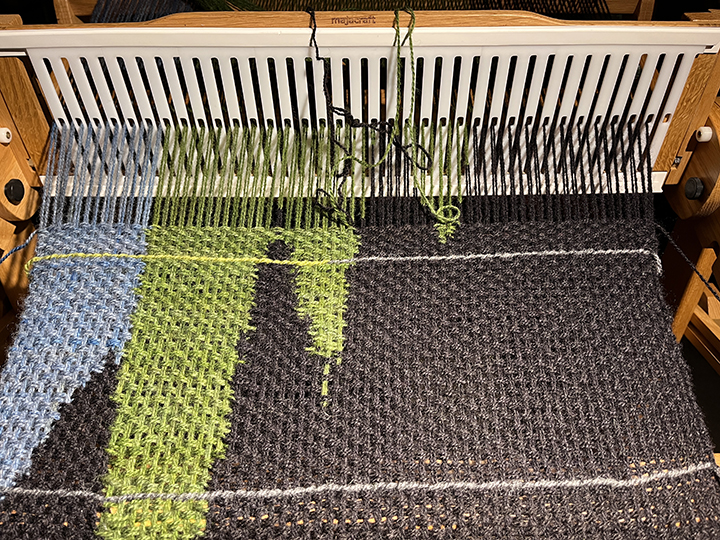
This method makes it quite manageable to work with multiple colours or threads in a clasped weft—although I wouldn’t recommend starting with this approach if you’ve never tried the technique before.
There are some excellent books available on weaving with a clasped weft, and you can also find a range of tutorials online.
(Example of tutorial on Clasped Weft: https://youtu.be/H1OADyQUCbE?feature=shared and Clasped Warp: https://youtu.be/7s_CjPRVIAw?feature=shared)
About the secret of the soft barbed wire.
While taking a break from spinning, I was tying up some roses in my garden when I realised that the rubber-coated garden wire I was using had just the right texture and flexibility to resemble barbed wire—without actually using the real thing.
After studying various types of barbed wire, I figured out how to bend the garden wire to mimic its shape. The fact that I often work with metal wire and have a good collection of tools certainly helped.
After that, all it took was a small pot of iron-coloured paint to create a form of barbed wire that looked visually strong.
Using the fake barbed wire results in a shawl that’s perhaps not comfortable, but wearable.
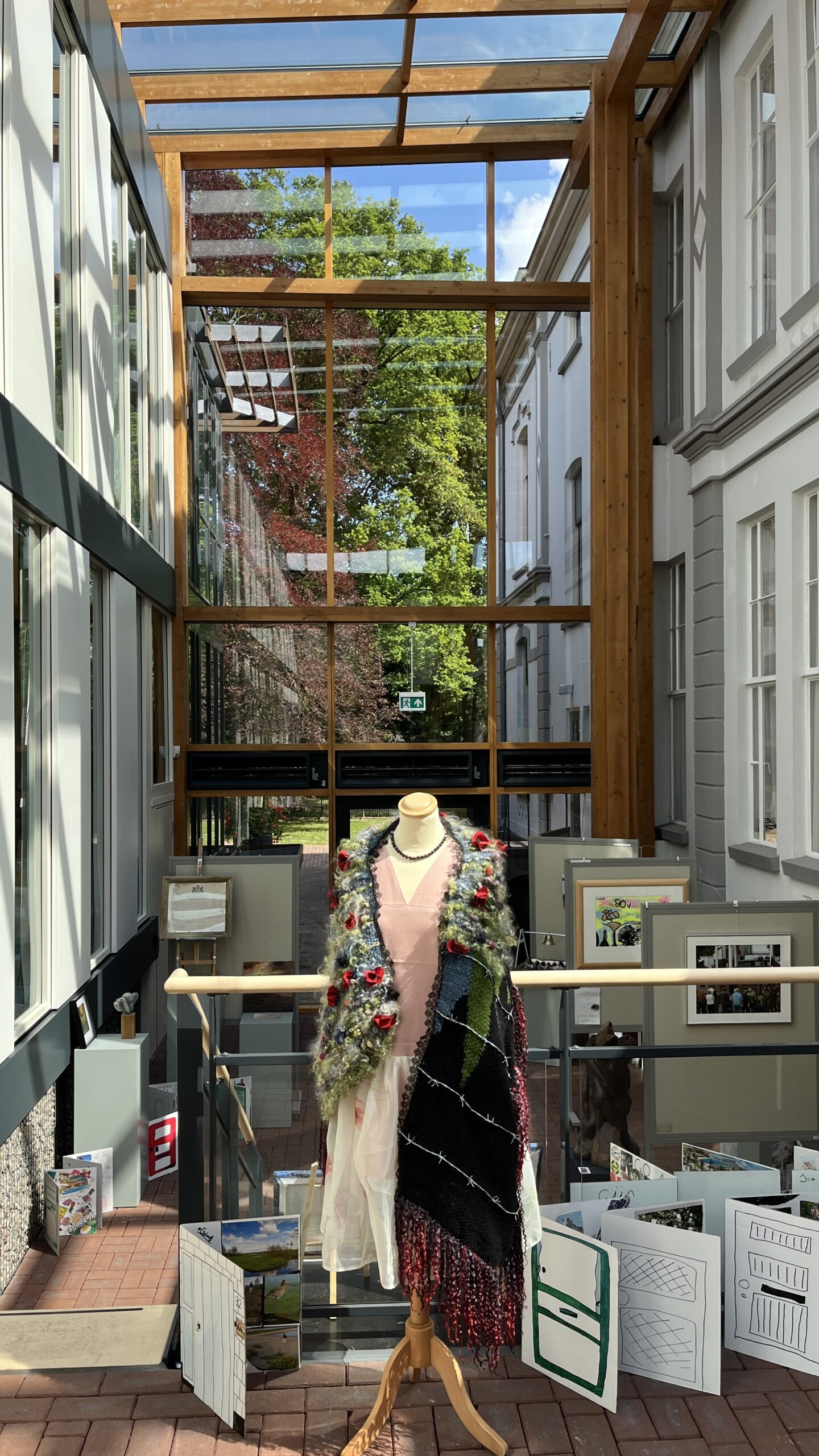
Above: The Libertas Shawl in the gallery as part of the exhibition commemorating eighty years of liberation in the Netherlands following the end of WW2.
This shawl carries a story, which you can read about in the accompanying article in Tiny Studio issue 27.
You might also be interested in the video that accompanies the ‘Eighty Years of Liberation’ project.
Freedom is easily taken for granted, but I’m deeply grateful for the peace I grew up in and aware of how fragile it is.

(Editors note: Many, many thanks to Ineke, a regular contributor of inspirational creative weaving in tinyStudio magazine! You can find Ineke via her website: Tricky Thread )
Ineke, this is absolutely stunning. Your inspiration and creativity leave me speechless!! Thank you for sharing the journey. Very humbling.
And thank you Suzy for being a part of this journey for our enlightenment and enjoyment
Dianne A
The shawl is beautiful and such a clever way of incorporating the wire into the design!
I cannot believe that is rubber coated wire. Clever!